Subscribe to out newsletter today to receive latest news administrate cost effective for tactical data.

Let’s Stay In Touch

Shopping cart

Subtotal $0.00

View cartCheckout

HSG (Hysterosalphingogram)

  • Home
  • HSG (Hysterosalphingogram)

HSG (Hysterosalpingogram) – An Important Fertility Test

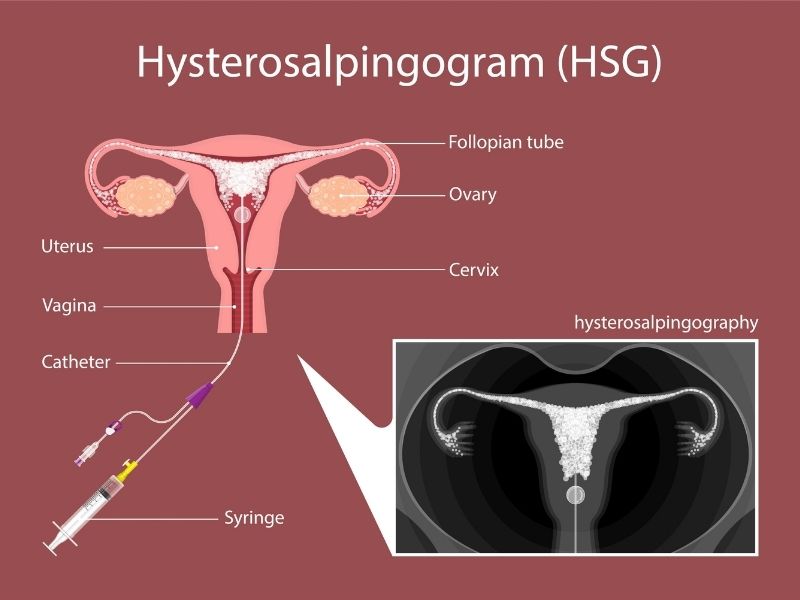
A Hysterosalpingogram (HSG) is a specialized imaging test used to examine the uterus and fallopian tubes. It plays a key role in fertility evaluation and is often suggested for women who are finding it difficult to conceive or have a history of recurrent miscarriages. The procedure helps detect issues such as blocked fallopian tubes, uterine irregularities, or other hidden causes of infertility.

What is an HSG?

A contrast dye is gently introduced into the uterus through the cervix.

X-rays track the flow of the dye through the uterus and fallopian tubes.

This test checks whether:

Fallopian tubes are open

Uterine structure is normal

Why is an HSG Done?

An HSG is recommended in cases such as:

Infertility Investigations – To detect blocked tubes or uterine abnormalities that prevent conception.

Recurrent Miscarriages – To rule out anatomical issues contributing to pregnancy loss.

Unexplained Pelvic Pain – To uncover possible structural causes.

After Surgery – For example, post-tubal ligation reversal to check tubal patency.

How the Procedure is Performed

Preparation

Done after menstruation but before ovulation (usually Day 6–11).

Mild painkiller (e.g., Ibuprofen) advised before the procedure.

Patient lies down like during a pelvic exam.

Contrast Dye Injection

A speculum is inserted to view the cervix.

A thin catheter introduces dye into the uterus.

X-ray Imaging

X-rays are taken as dye moves through uterus and tubes.

Completion

Total time: 15–30 minutes

Some cramping or light spotting may follow.

What Can an HSG Reveal?

Blocked Fallopian Tubes – A major reason for infertility.

Uterine Abnormalities – Fibroids, adhesions, polyps, or congenital issues.

Hydrosalpinx – Fluid-filled blocked tubes that may affect fertility.

Endometrial Concerns – Issues like scarring or polyps.

Benefits of HSG

Non-surgical and quick procedure

Helps accurately diagnose fertility problems

May improve fertility by clearing minor blockages

Outpatient test with fast results

Risks & Considerations

Temporary cramping or discomfort

Rare chance of allergic reaction to dye

Slight infection risk (rare with proper precautions)

Minimal radiation, generally safe

After the Test

Mild cramps or spotting may occur and settle the same day

A follow-up appointment at Manasi Clinic ensures:

Clear explanation of HSG results

Guidance on next steps in your fertility plan