Subscribe to out newsletter today to receive latest news administrate cost effective for tactical data.

Let’s Stay In Touch

Shopping cart

Subtotal $0.00

View cartCheckout

Antepartum Hemorrhage (APH)

  • Home
  • Antepartum Hemorrhage (APH)

Antepartum Hemorrhage (APH)

Antepartum Hemorrhage (APH) is defined as bleeding from or into the genital tract after 28 weeks of pregnancy and before the birth of the baby. It is a serious obstetric emergency that can endanger both maternal and fetal life. The two major causes are Placenta Previa and Placental Abruption.

1. Placenta Previa
Placenta previa occurs when the placenta is implanted in the lower uterine segment, partially or completely covering the cervix.
Types:
• Low-lying placenta
• Marginal placenta previa
• Partial placenta previa
• Complete placenta previa
Clinical Features:
• Painless vaginal bleeding in the third trimester
• Soft, non-tender uterus
• Fetal parts easily felt and fetal heart sounds usually present
Diagnosis:
• Ultrasound is the investigation of choice to locate the placenta.
• Per vaginal examination is avoided unless done in an operating theater.
Management:
• Hospitalization and bed rest for observation.
• Blood transfusion if necessary.
• Emergency cesarean section if bleeding is severe or placenta completely covers the os.

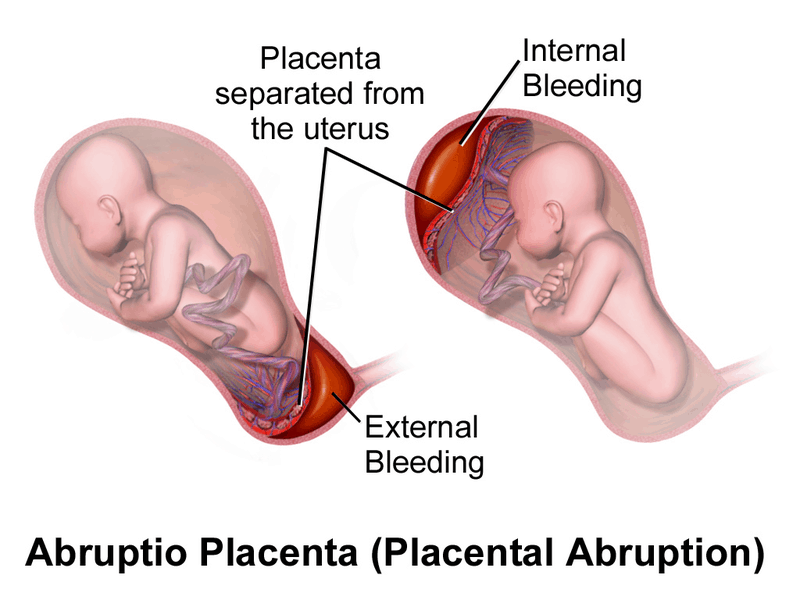
2. Placental Abruption (Abruptio Placentae)
Placental abruption occurs when the normally implanted placenta separates prematurely from the uterine wall, leading to hemorrhage.
Clinical Features:
• Painful vaginal bleeding
• Tender and hard (“board-like”) uterus
• Fetal distress or death may occur
• Maternal shock and coagulopathy in severe cases
Diagnosis:
• Clinical assessment based on pain, bleeding, and uterine tone.
• Ultrasound may help, though it can miss small abruptions.
Management:
• Stabilize the mother (IV fluids, blood transfusion).
• Monitor fetal well-being.
• Immediate delivery (usually by cesarean section) if the fetus is alive and maternal condition allows.
• Vaginal delivery may be allowed if the fetus is dead and bleeding is controlled.

3. Emergency Management of APH
• Admit to hospital and ensure IV access with two large-bore cannulas.
• Send blood for grouping, cross-matching, and hemoglobin estimation.
• Monitor vital signs and urine output.
• Administer oxygen and IV fluids to prevent shock.
• Immediate obstetric evaluation and plan for delivery depending on cause and fetal condition.

Conclusion
Early recognition, stabilization, and timely intervention are crucial in managing APH. Proper differentiation between placenta previa and placental abruption ensures optimal maternal and fetal outcomes.